
 Nicole Dolezalova
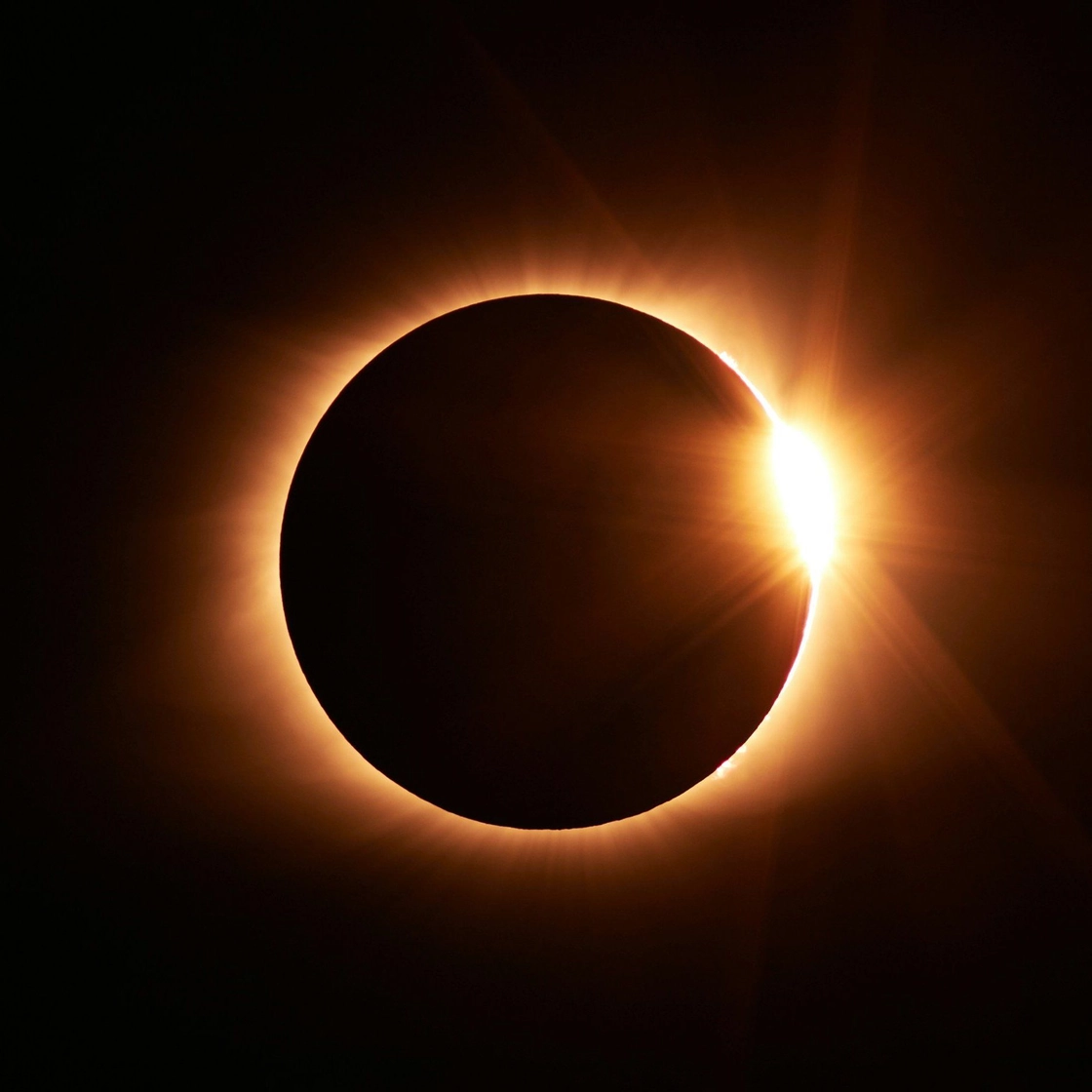
 On 12 August 2026, the sky puts on a rare double feature. In the evening, mainland Europe gets its first total solar eclipse since 1999. A few hours later, the Perseid meteor shower hits its peak, and because a solar eclipse only happens at new moon, that same night is completely moonless. Here's how to catch both with Windy.
Plan your night with Windy
The whole event is worthless under cloud, so set yourself up in Windy first. Start days ahead to pick the right spot, then confirm on the day.
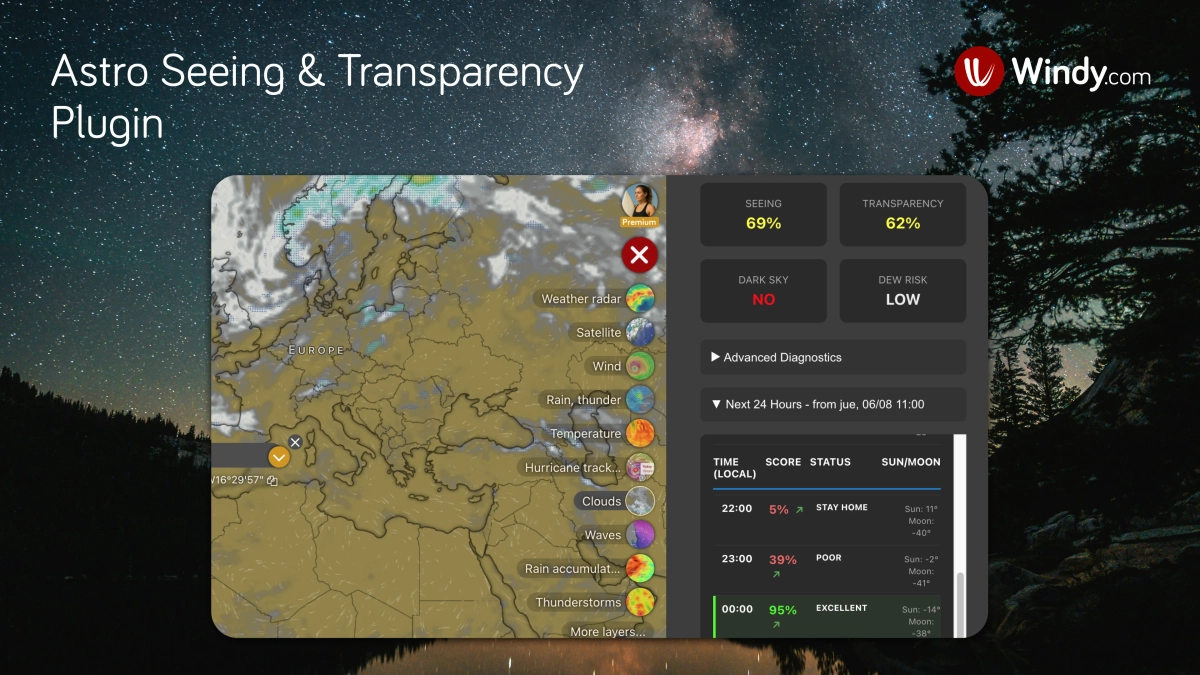
Astro Seeing & Transparency (Windy plugin) is the best place to start. It scores stargazing conditions from 0 to 100% and splits seeing (steady air) from transparency (clear air), with a DSO mode for meteors and a Planetary mode for the Moon and planets, and it flags the best time windows.
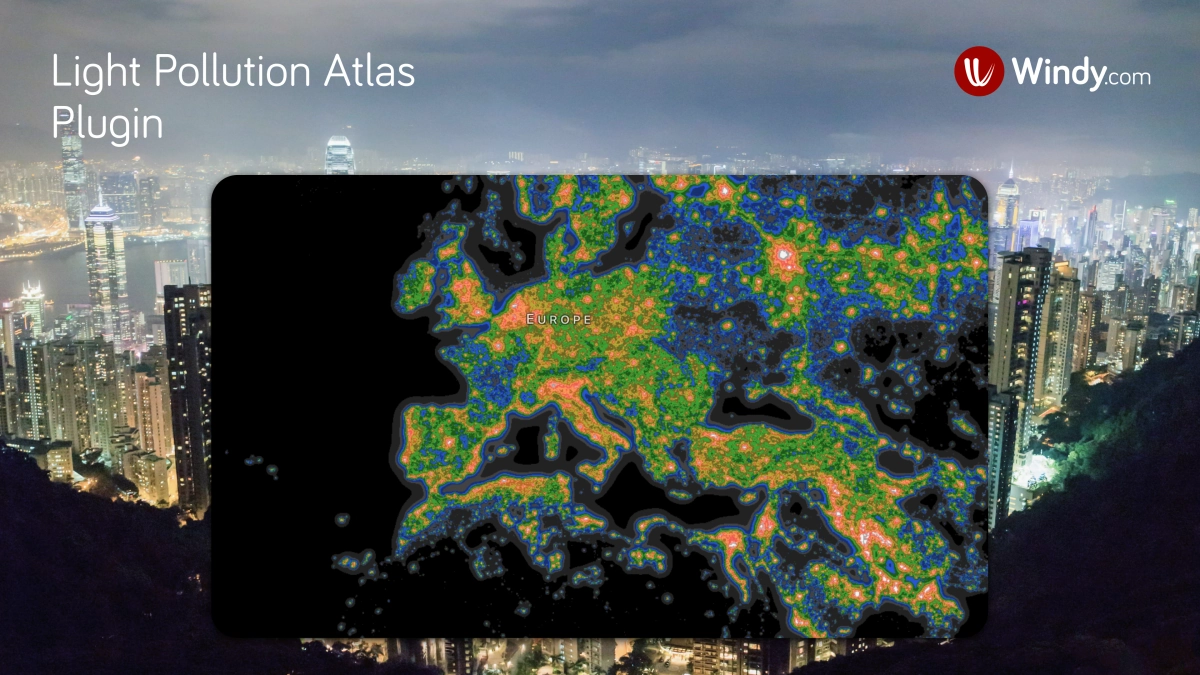
Light Pollution Atlas (Windy Plugin) helps you find a genuinely dark site away from city glow, both for the eclipse and for the Perseids later that night.
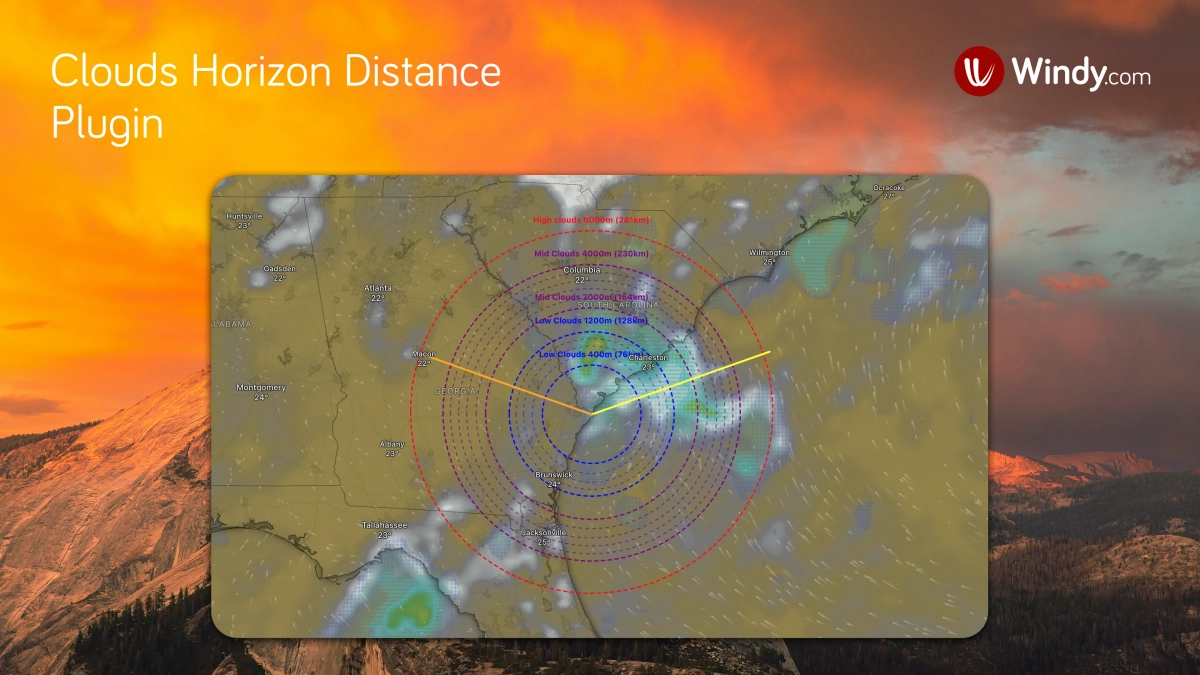
Clouds Horizon Distance (Windy plugin) is a landscape-photographer favourite, and ideal for the sunset eclipse. It shows whether distant clouds will actually sit on your horizon, something a normal forecast misses, so you know in advance if a low cloud bank could block the Sun.
Sun & Moon position (Windy Plugin) gives you sunset and twilight times and their paths with just one click.
Outdoor maps (by Mapy.com) give you topographic maps and tourist trails to scout elevated spots and more remote, darker locations.
Cloud forecasts (Windy layers), including low and high clouds, help you study how the cloud cover builds over your spot in the upcoming days. With the new version, you can now compare meteograms from different weather models to see how much they agree.
Where to find the Windy plugins? Check this article.
Where to find Sun & Moon position? Check this article.
Read more about the Clouds Horizon Distance plugin in this article.
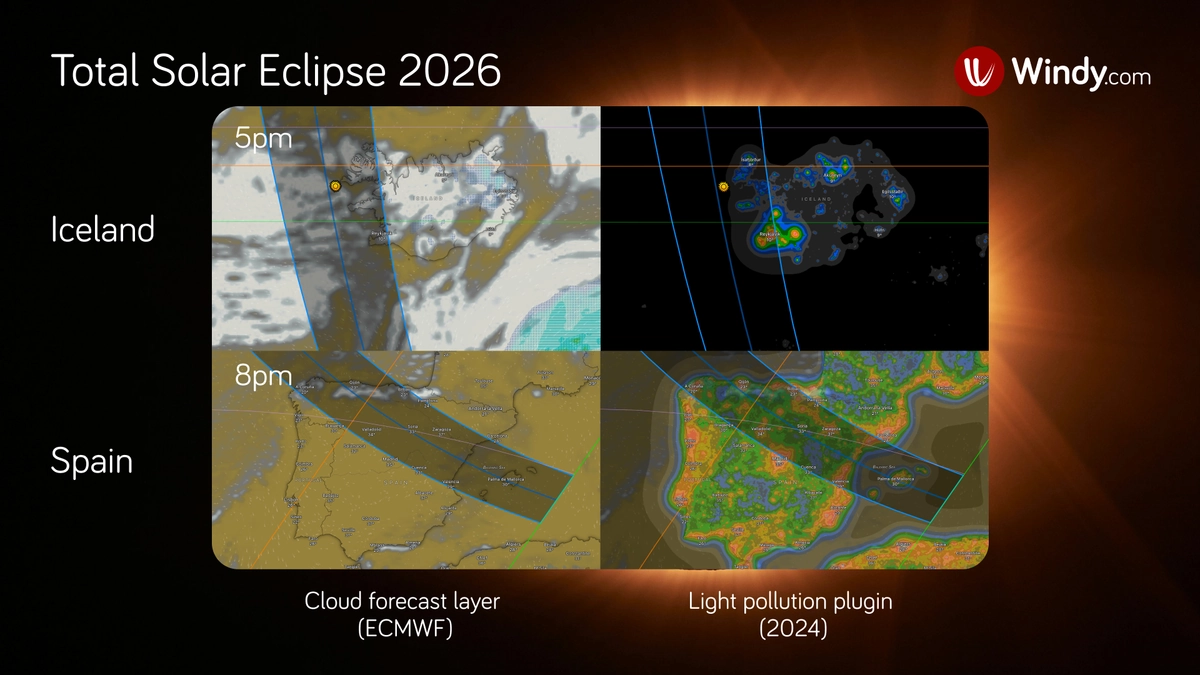
Where and how to watch the solar eclipse
The Moon's shadow sweeps from the Arctic down across Greenland, Iceland, and northern Spain, including the Balearic Islands (Mallorca, Menorca, Ibiza and Formentera). If you're standing inside that narrow path, the Sun disappears completely for up to 2 minutes 18 seconds in some regions.
Approximate start of totality (UTC time, local time in brackets):
- Iceland (Reykjavík): 17:48 UTC
- Spain (Valladolid, Zaragoza, León): 18:28 UTC (20:28 CEST); Palma de Mallorca and Valencia a few minutes later
- Portugal (north-east of Bragança): 18:30 UTC (19:30 WEST)
Open the Sun eclipse path directly in Windy, created by Alek Chakroff.
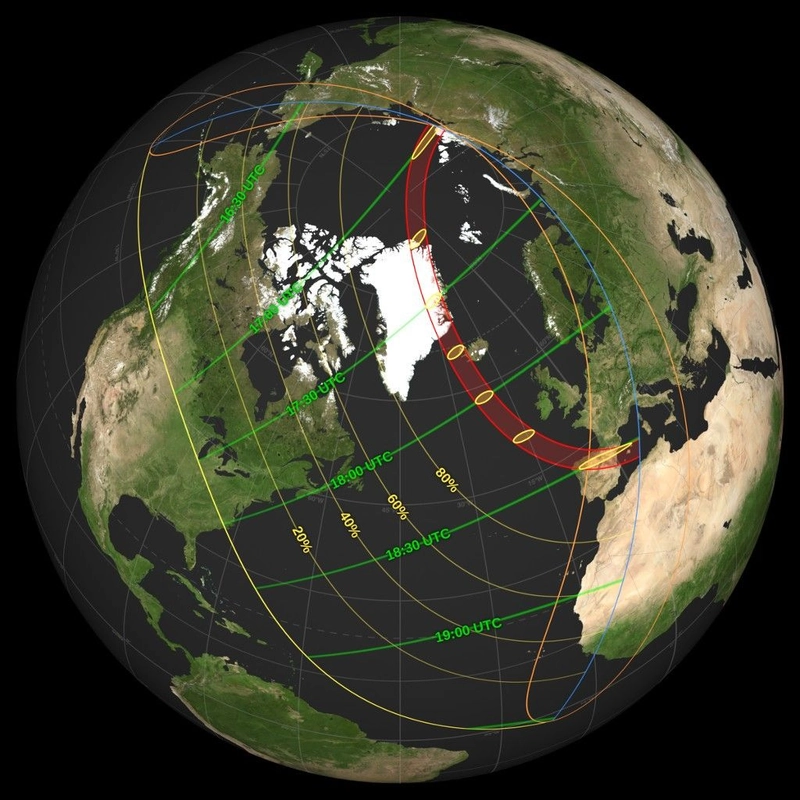
Credits: NASA's Scientific Visualization Studio Source: NASA
Photographers, this is for you now: in Spain and Portugal it is a sunset eclipse. The Sun sits very low in the west, so you need a clear, unobstructed western-to-northwestern horizon. A coastline or an elevated spot is ideal. Start your scouting now.
Partial eclipse across Europe and North America
Everywhere outside the narrow path of totality, the Moon takes a bite out of the Sun instead of covering it fully. Two regions get the show, and they look very different.
Across the rest of Europe (plus north-west Africa), the Sun turns into a dramatic crescent, low in the evening sky.
Check details about maximum eclipse, UTC time (local in brackets), and how much of the Sun gets covered in %.
- Barcelona (~99.8%): 18:29 UTC (20:29 CEST)
- Berlin (~85%): 18:08 UTC (20:08 CEST)
- London (~91%): 18:13 UTC (19:13 BST)
- Madrid (~99.9%): 18:31 UTC (20:31 CEST)
- Paris (~92%): 18:17 UTC (20:17 CEST)
- Porto (~98%): 18:31 UTC (19:31 WEST)
- Prague (~88%): 18:11 UTC (20:11 CEST)
- Rome (~69%): 18:11 UTC (20:11 CEST)
- Vienna (~85%): 18:10 UTC (20:10 CEST)
Across the Atlantic, the northern and eastern parts of the USA and Canada also catch a partial eclipse, but a modest one. It happens in the afternoon (no sunset drama here), and for most cities it is only a small nick in the Sun. The best of it is in Atlantic Canada, Alaska, and New England:
- Anchorage, USA (~28%)
- Bangor, Maine, USA (~24%)
- Boston, USA (~16%)
- Fairbanks, USA (~37%)
- Halifax, Canada (~31%)
- Montreal, Canada (~18%)
- New York, USA (~9%)
- St. John's, Canada (~53%)
- Toronto, Canada (~8%)
⚠️ Protect your eyes
Never look at a partial eclipse with the naked eye, and sunglasses are not enough, no matter how dark. Use only certified ISO 12312-2 eclipse glasses or a proper solar filter, also over any camera or binoculars.
Where and how to watch the Perseids
Don't pack up after sunset. The Perseid meteor shower peaks overnight on 12–13 August, with the richest activity roughly 02:00–04:00 UTC on the 13th (04:00–06:00 CEST). Thanks to the new-moon darkness, 2026 is exceptional. A solar eclipse won't line up with the Perseid peak again until 2045.
Unlike the eclipse, the Perseids don't tie you to one spot: they are visible right across the Northern Hemisphere, all of Europe and the USA and Canada too. The meteors radiate from the constellation Perseus in the north-east, but you don't need to stare at it. Find the darkest sky you can, let your eyes adjust for 20 minutes, and look up. Wherever you are, the best show comes after local midnight.
Eclipse at sunset, meteors after midnight, all under the same dark new-moon sky. Load up your plugins, pick a spot with a clear horizon, watch the clouds, and don't forget the eclipse glasses.
Open the plugins built by the Windy community, and enjoy your perfect night.
Headline image: Photo by Jongsun Lee on Unsplash
Comments (83)