
 Sophia V.Q. Stoltz
Follow Ocean Call live on Windy
From the start on 1 November, Milan's position is shown right on the Windy map. Open the Race Tracker plugin to see Ocean Call (Class40 #216) on top of the wind, wave and pressure layers, then move the timeline forward to see what's coming his way.
Get Race Tracker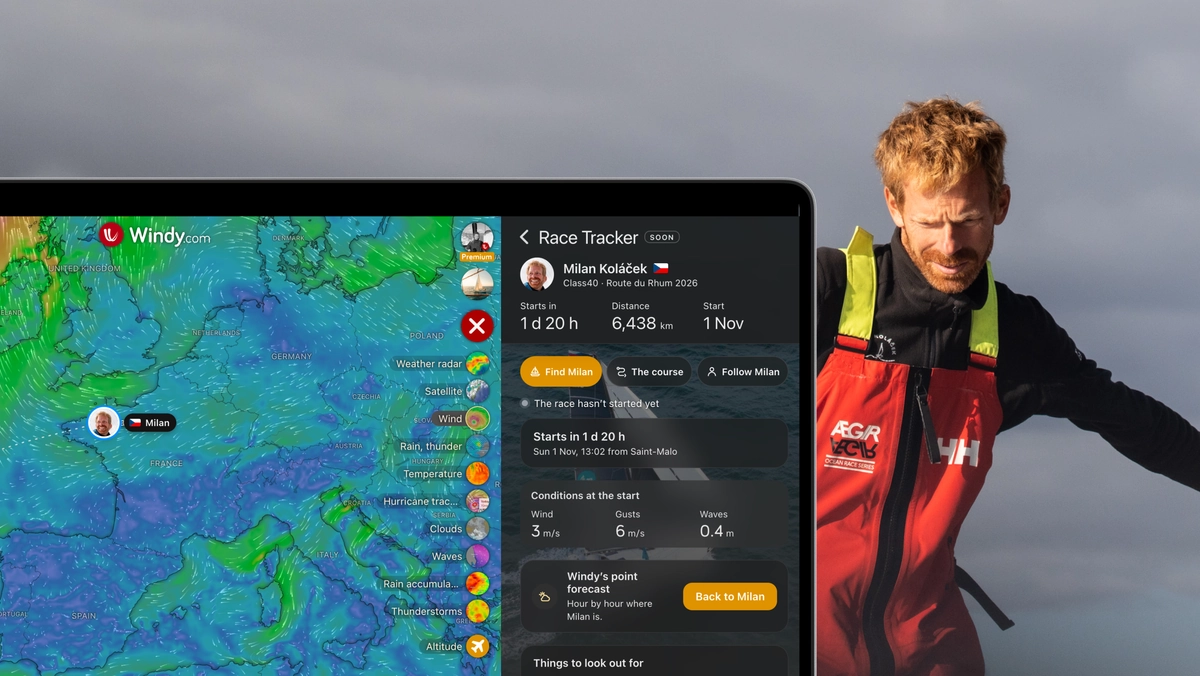
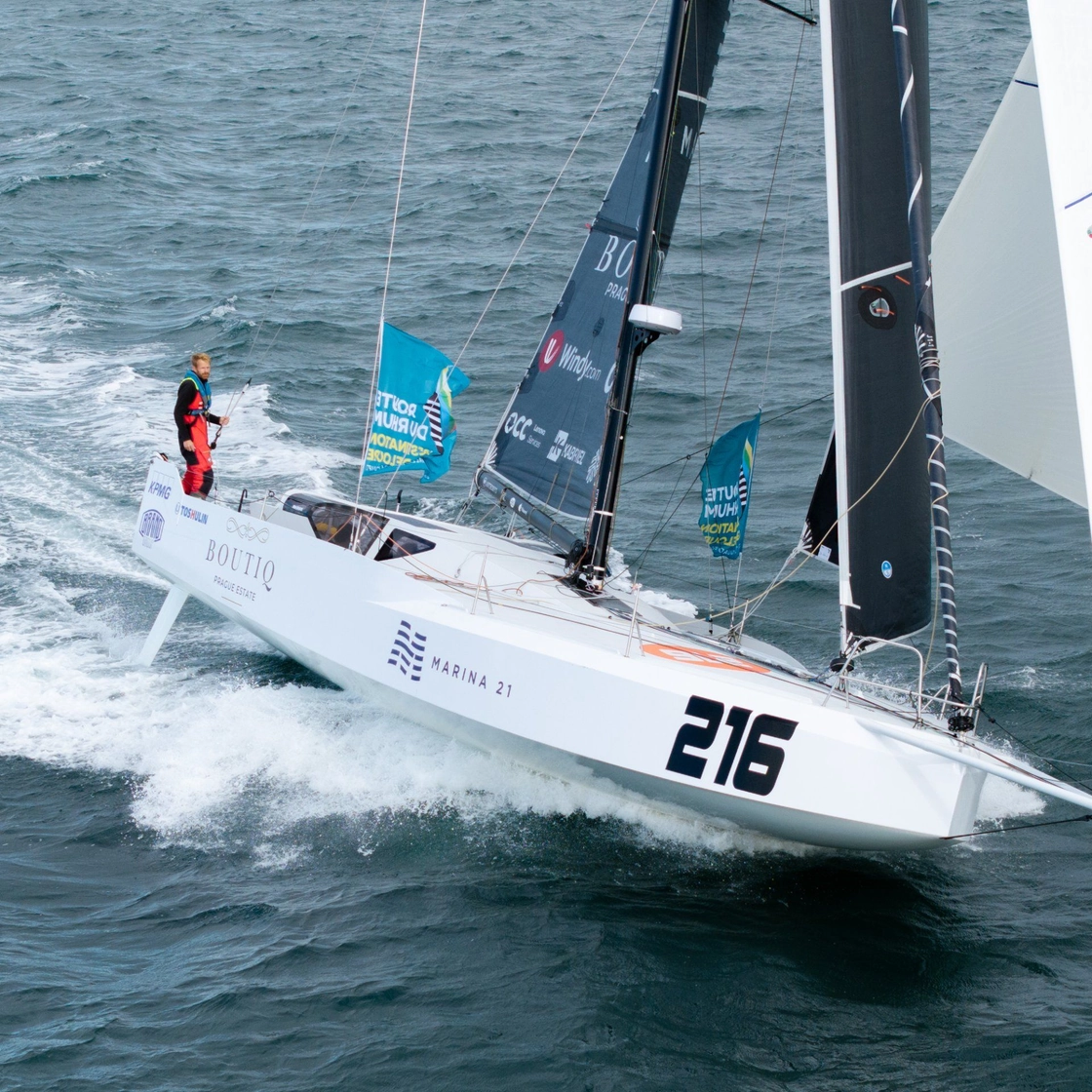
On Sunday 1 November at 13:02, 118 solo sailors leave Saint-Malo for Guadeloupe. Among them, on the brand-new Class40 Ocean Call, is Milan Koláček: a Windy athlete and the first Czech skipper ever to start the Route du Rhum, and a sailor who will spend the next two to three weeks reading the same wind and waves you see on Windy.
Every four years, the Breton port of Saint-Malo fills with some of the fastest sailing boats on the planet. The Route du Rhum, first sailed in 1978, sends single-handed skippers 3,542 nautical miles across the Atlantic to Pointe-à-Pitre in Guadeloupe. No crew, no stops, no help from outside. This year's fleet is a record: 118 sailors in six classes, from 32-metre flying trimarans to vintage boats.
In the biggest class of all, Class40, with 49 boats, one sail carries a flag the race has never seen on its start line. Milan Koláček will be the first Czech skipper to take part.
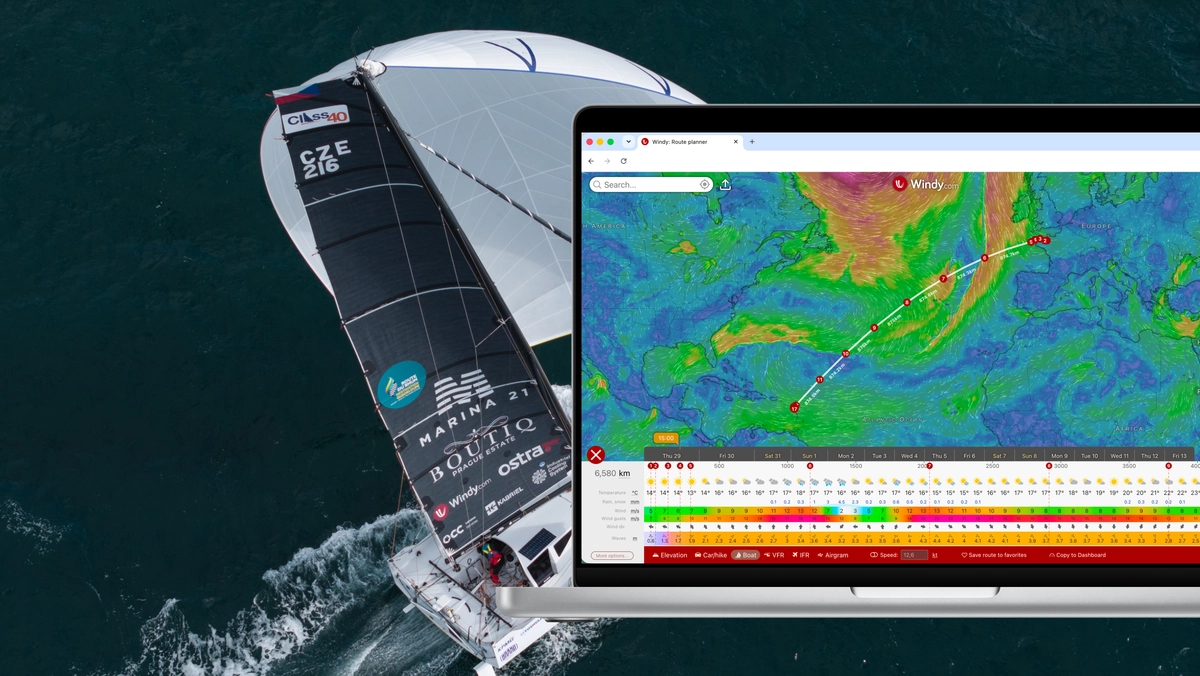
Route du Rhum 2026 at a glance
A race decided by the weather
For Windy users, the Route du Rhum is a weather story first. The start looks kind: race forecaster Meteo Consult expects a northeasterly of 10–12 knots, gusting 18–20, to push the fleet out of the Channel. After that, four stretches of ocean will shape the race. If you're on a desktop browser, tap a stage to see it on the map.
The route in four weather stages
1English ChannelDays 1–2. Strong tidal currents, busy shipping lanes, almost no sleep.Tides → 2Bay of Biscay & Cape Finisterre
Autumn lows can bring strong winds and big seas.Waves → 3Azores High
Dive south for the trade winds, or cut the corner and risk light air.Pressure → 4Trade winds to Guadeloupe
Steady easterlies, squalls at night, the sprint to Pointe-à-Pitre.Wind →
Solo sailors make these calls themselves, alone at the chart table, with forecast data downloaded on board.
From the reservoirs of Moravia to Brittany
Milan Koláček, born in 1979, grew up in Brno, a few hundred kilometres from the nearest sea. He learned to sail on Czech reservoirs with his brother. With no coach, he kept notes after every outing: where the wind came from, how the sails were set, how the boat answered.
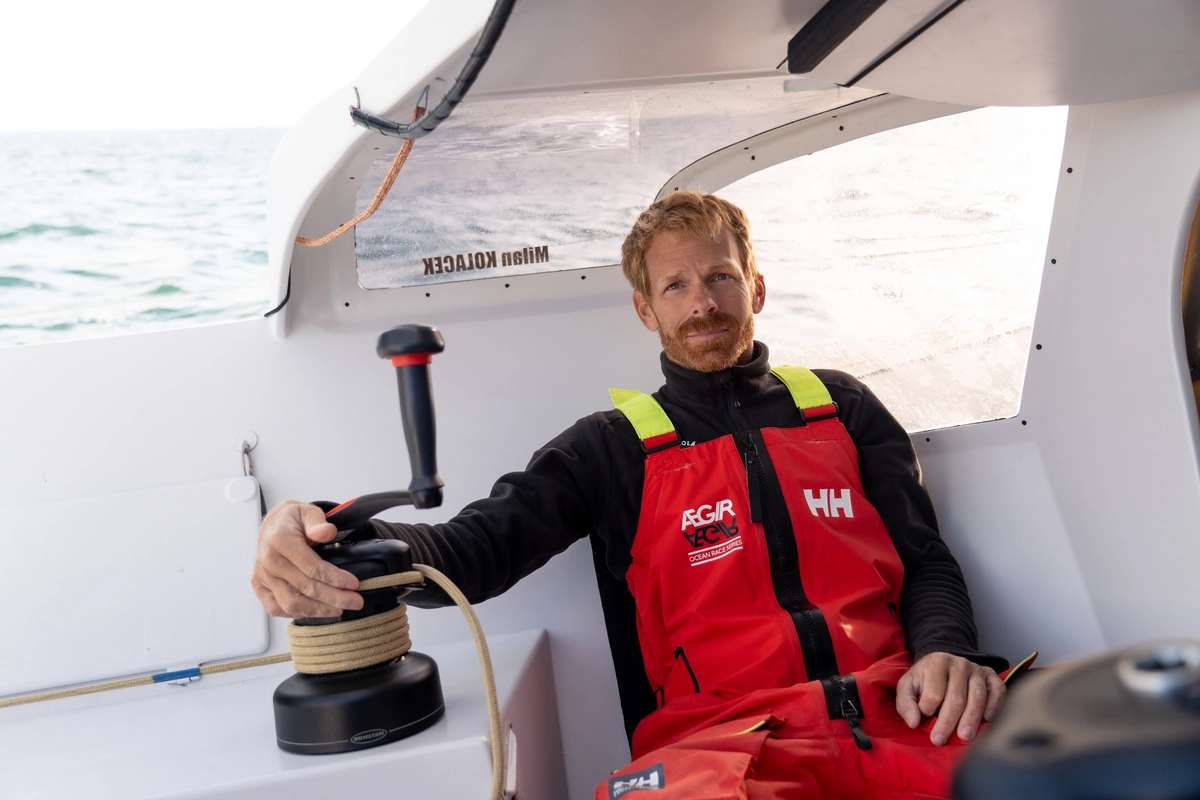
The ocean came later and the long way round. He studied mechanical engineering and wrote his thesis on composite materials. Then he moved to wherever sailing was a national sport: Ireland, then New Zealand, where he talked his way into the Auckland boatyard Cookson Boats by knocking on the door after his emails went unanswered. Back home he built his own carbon Mini 6.50 and took it to Brittany, the heartland of solo ocean racing. In 2012 he won the French Mini championship.
Years in the Figaro class followed, along with class wins at the Rolex Middle Sea Race and a European solo title in 2022. In 2025 he moved up to Class40 and finished sixth in his first solo race in the class.
A new boat, built in five months
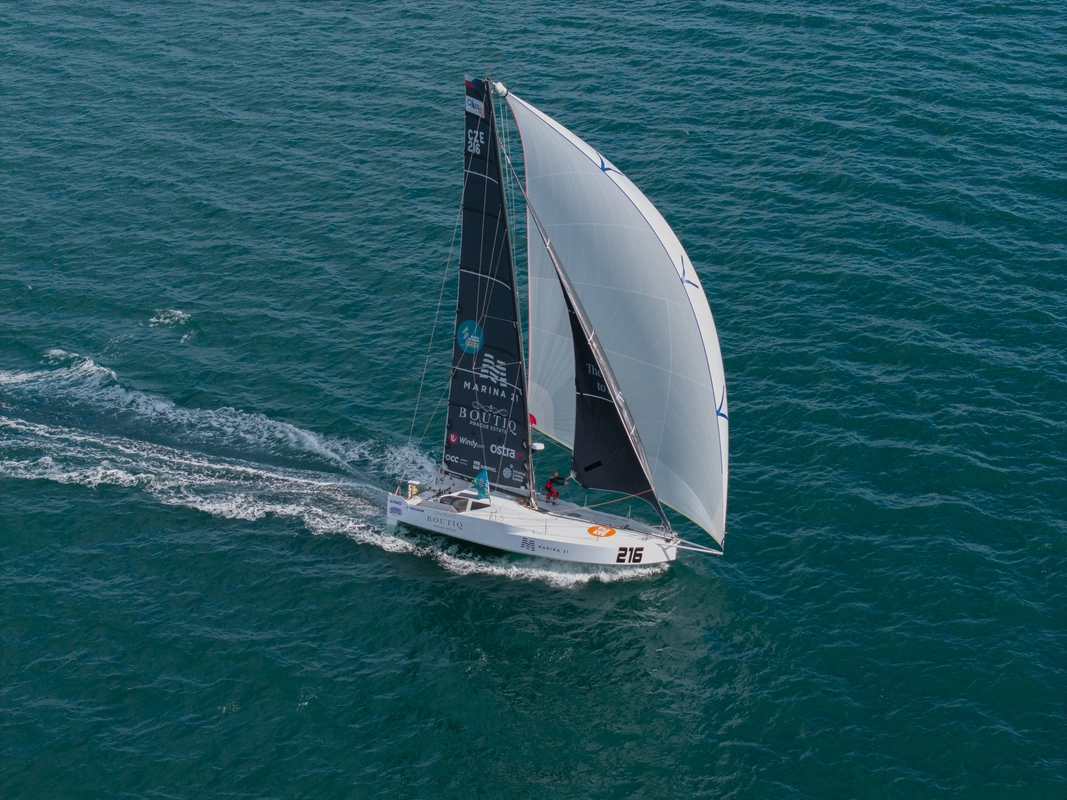
For this race Milan Koláček wanted a competitive boat, and he helped build it. Ocean Call (Class40 no. 216) is a Mach 40.6 designed by Sam Manuard and built by JPS Production in Brittany. It went from signed contract to launch in about five months and hit the water in July 2026. In August he sailed it 1,200 miles solo to qualify, topping 24 knots on the way.
Being a boatbuilder matters out there. Things break, and the skipper is the only one who can fix them. Koláček knows this first-hand: in a past race a collision with an orca cost him his rudder.
His goals are realistic. "Simply making it to the start is already a hugely important goal," he told the Class40 association. The first aim is to get through the opening days safely and finish. If all goes well, he would like to fight for a top-ten place in a class where nearly half the skippers are rookies and six have won the race before.
Follow him on Windy
You don't need a boat to follow the race. Open the Race Tracker plugin to see Ocean Call on the map, then switch between the Wind, Gusts, Waves and Pressure layers and move the timeline forward. You will see the same lows, highs and trade winds Milan is trying to work around.
The fastest trimarans should reach Guadeloupe within about a week. The Class40 fleet will need roughly two to three weeks. Somewhere out there will be Ocean Call, sail number 216, with a Czech skipper reading the same map you are.
Windy is one of the partners of Milan Koláček's Ocean Call project.
Comments (15)