
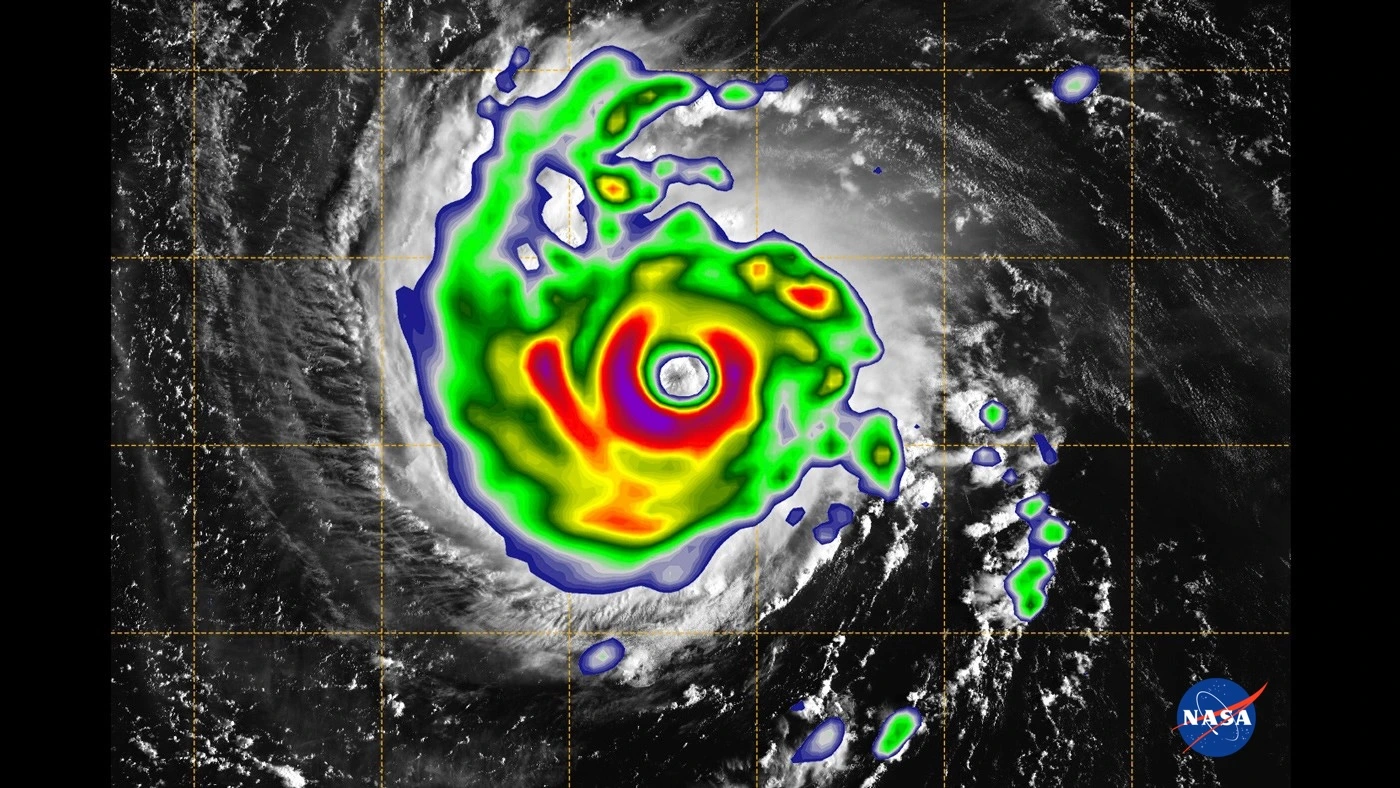

Barbara, Ema, Lorenzo… Do those names sound familiar? It’s no surprise. The tropical storms that carried them have impacted the lives of many along the coasts of the Atlantic and eastern Pacific in the past. And this year, these names might appear again. Tropical storms in these regions don’t get random names, they’re selected from pre-determined, rotating lists.
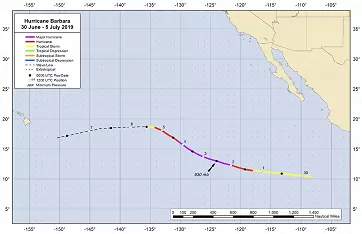
Hurricane Barbara track positions, 30 June–5 July 2019; NOAA
Why do tropical storms get names?
Giving a storm a name is a simple and practical way to make communication clearer and avoid confusion. When several cyclones form over the ocean at the same time, having a distinct name helps meteorologists, the media, emergency responders, and people in affected areas clearly identify the specific storm being discussed.
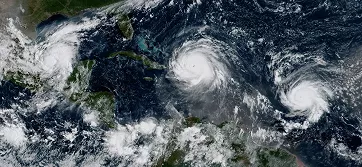
GOES-16 Sees Three Hurricanes in the Atlantic 2017; NOAA
History of Storm Naming
Historically, tropical cyclones have been given names for a long time, but the process was unstructured. Storms were often named after the saint’s day on which they struck. For example, San Felipe (the first) and San Felipe (the second) hit Puerto Rico on September 13 in 1876 and 1928, respectively.
Another example is Hurricane Antje, which got its name from the ship HMS Antje, whose mast was broken by the storm on August 30, 1842, in the western Atlantic.
Gradually, efforts to bring more order emerged. Storms were identified by geographical coordinates or letters of the phonetic alphabet.
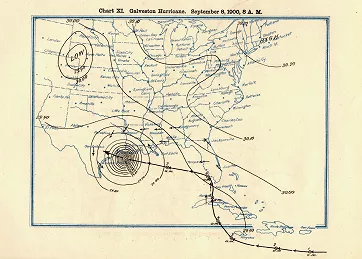
Synoptic map of Hurricane Galveston, named after the city it hit hardest; NOAA
The storm-naming system as we know it today was established in the second half of the 20th century. In 1953, the United States began using female names for storms in the Atlantic. In 1978, both female and male names were introduced into the storm lists for the eastern North Pacific. A year later, in 1979, names of both genders also began to be used for the Atlantic and Gulf of Mexico.
Are all tropical cyclones named?
Tropical cyclones are only given a name once they reach tropical storm status. That is, when their sustained wind speed reaches at least 39 mph (63 km/h). At that point, the storm receives a name from the current list designated for that season and region.
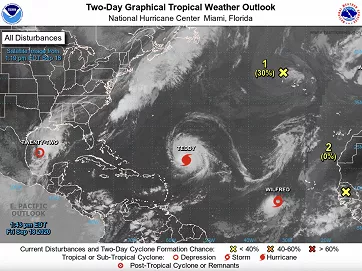
A Tropical Weather Outlook displaying one named hurricane (Teddy), one named tropical storm (Wilfred), and one numbered depression (Twenty-Two); NOAA
Across the broad hurricane region, three separate name lists are used each year:
for the Atlantic (including the Caribbean and Gulf of Mexico),
for the eastern North Pacific,
and for the central North Pacific.
Each of these lists is created with consideration for the language and cultural context of the region it covers.
Who chooses the names?
The lists of names for tropical storms in the North and Central American region are prepared by the Hurricane Committee of Regional Association IV, which operates under the World Meteorological Organization (WMO).
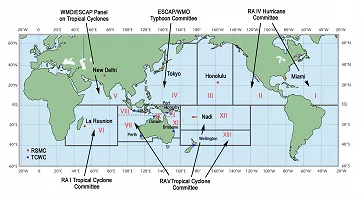
WMO’s Five Regional Tropical Cyclone Bodies; WMO
When selecting new names, the committee follows several guidelines. Names must be short, easy to pronounce, and understandable across the various languages spoken in the region. They must not duplicate names used elsewhere in the world, and they cannot refer to specific individuals, among other criteria.
Names are listed alphabetically, but certain letters (like Q) are skipped due to a lack of suitable names.
When is a name retired?
If a storm causes exceptional damage or results in significant loss of life, its name can be permanently retired from the list at the request of any member state. The decision is made during the committee’s meeting held after the end of the season. The retired name is then replaced with a new one of the same gender and starting with the same letter. Retiring a name serves as a mark of respect for the victims.
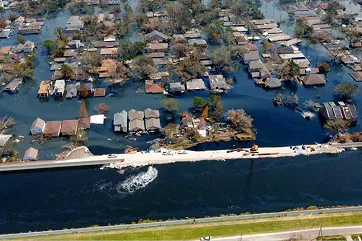
The devastation caused by Hurricane Katrina (2005) led to the retirement of its name from the list; National Wildlife Federation/NOAA
What if there are more storms than names?
This has happened only twice in the Atlantic so far, during the exceptionally active seasons of 2005 and 2020. Once the list of names was exhausted, the Greek alphabet (Alpha, Beta, etc.) was used according to established rules.
However, it became clear that some Greek names were difficult to pronounce or too similar to one another. Moreover, there was no official way to retire a Greek name, even when the storm it represented was especially destructive.
As a result, the Hurricane Committee decided to discontinue the use of the Greek alphabet altogether and replace it with a standard supplemental list of names. This allowed two very powerful hurricanes from 2020, Eta and Iota, to be retired.
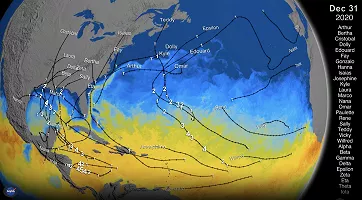
Visualization of tropical cyclone activity during the 2020 hurricane season; NASA
Since 2021, two backup lists have existed — one for the Atlantic and one for the eastern North Pacific. These lists are only used if the main list is exhausted.
In the eastern Pacific, however, the main list has never been exhausted. It contains more names than the Atlantic list and has always been sufficient, even in highly active seasons.
Names for Caribbean Sea, Gulf of Mexico, and the North Atlantic
There are six main name lists and one supplemental list used for the Atlantic basin. Each main list is assigned to a specific year and contains 21 names arranged in alphabetical order.
In 2025, the same list is being used as in 2019, 2013, 2007, 2001, and earlier. This means the first named storm of the season will be Andrea, followed by Barry, Chantal, and so on.
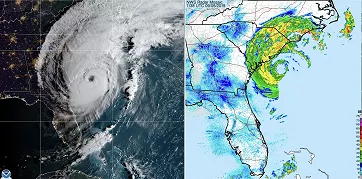
Hurricane Dorian moving along the Southeast U.S. coast on September 5, 2019 (satellite and radar imagery); NOAA
However, one change has been made since 2019: the name Dorian has been replaced with Dexter. Why? In 2019, Dorian reached Category 5 strength and devastated Grand Bahama and Great Abaco, later also impacting the Outer Banks of North Carolina. After the season, the name was retired and replaced due to the storm’s severe impact.
According to the latest forecast from Colorado State University (CSU), 17 named storms are expected this year. If that prediction holds true, the last named storm of the season will be Rebekah.
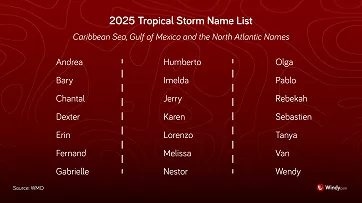
Tropical Storm Names 2025: Caribbean Sea, Gulf of Mexico, and North Atlantic; WMO
Names for the Eastern North Pacific
In the eastern North Pacific, the naming of tropical storms works similarly to the Atlantic region. There are also six main name lists and one supplemental list. Each list contains 24 names in alphabetical order, and storms are named sequentially, one after another, following the current list.
In 2025, the first tropical storm is named Alvin, followed by Barbara and the next names in alphabetical order, just as it was in 2019. No names were retired after the 2019 season, so the list remains unchanged.
According to the forecast by Mexico ’s national meteorological service (Servicio Meteorologico Nacional, SMN), up to 20 named storms could form this season. If that prediction comes true, the last named storm will be Velma.
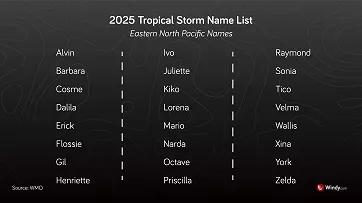
Tropical Storm Names 2025: the Eastern North Pacific; WMO
Names for the Central North Pacific
The naming system in the Central Pacific differs from the two previous regions. There are four alphabetical name lists used in rotation, regardless of the calendar year. A new list is only used once all the names from the previous one have been exhausted.
In the 2024 season, the last named tropical storm was Hone. Therefore, in 2025, the naming will continue with the next name on the list, Iona.
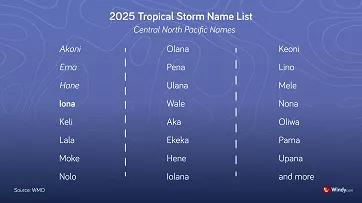
Stay Ready, Stay Informed
The 2025 hurricane season is forecast to be above average. Timely information about a storm can give you a crucial head start, and a chance to protect yourself and those around you.
Follow the development of tropical cyclones through satellite and radar imagery on Windy.com. The Hurricane Tracker tool also lets you compare different forecasts of the storm’s path and intensity.
 Jari Sochorová







Comments (3)
Great article, thanks!